
Recent Articles
Common Problems Solved by Customized Grinding Wheels in Industrial Applications
2026-05-22
Introduction: Why Standard Grinding Wheels Often Struggle in Precision Manufacturing
In industrial grinding applications, manufacturers often encounter issues such as unstable surface finish, excessive heat generation, vibration, inconsistent dimensions, and rapid wheel wear. While these problems are sometimes attributed to machine conditions or operating parameters, the grinding wheel itself is often a major contributing factor.
Standard grinding wheels are designed for general-purpose use, which means they may not always match the specific requirements of different materials or grinding conditions.
This is why more manufacturers are considering customized grinding wheels for precision and application-specific grinding processes.
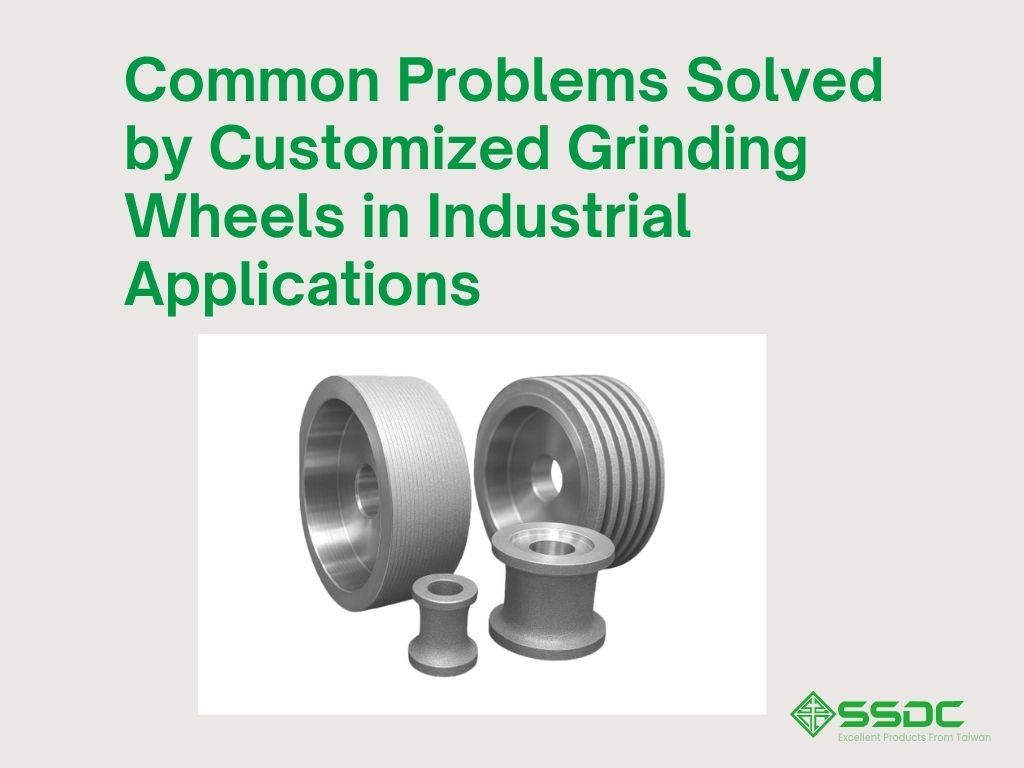
At Sea Shore Diamond Industrial Co., Ltd. (SSDC), we provide electroplated diamond and CBN grinding wheel solutions designed for various industrial grinding applications. By optimizing abrasive type, wheel structure, and grinding characteristics, customized grinding wheels can help improve grinding consistency and process stability.
Problem 1: Poor Surface Finish and Inconsistent Quality
One of the most common grinding problems is unstable surface quality. Scratches, uneven roughness, and inconsistent surface finish can affect both product quality and subsequent assembly processes.
Common Causes
-
Incorrect grit size
-
Uneven abrasive exposure
-
Wheel vibration or chatter
-
Unsuitable wheel structure for the application
How Customized Grinding Wheels Help
Customized grinding wheels allow optimization of:
-
Abrasive grain size
-
Grain concentration
-
Wheel balance and rigidity
-
Cutting edge exposure
SSDC’s electroplated grinding wheels provide uniform abrasive distribution and stable cutting performance, helping improve grinding consistency and surface quality.
Problem 2: Excessive Heat and Thermal Damage
Grinding generates heat, especially when machining hardened materials, carbide, ceramics, or glass.
Excessive heat may result in:
-
Burn marks
-
Surface cracks
-
Material deformation
-
Reduced workpiece quality
How Customized Grinding Wheels Help
Customized grinding wheels can help reduce grinding heat through:
-
High grain protrusion for sharp cutting
-
Lower grinding resistance
-
Improved chip evacuation
-
Optimized wheel geometry
Electroplated grinding wheels are particularly suitable for applications requiring reduced grinding resistance and stable cutting behavior.
Problem 3: Wheel Loading and Reduced Grinding Efficiency
Wheel loading occurs when chips accumulate between abrasive grains, reducing cutting ability and increasing grinding resistance.
This problem is commonly seen when grinding:
-
Aluminum alloys
-
Soft metals
-
Sticky materials
-
High-removal-rate applications
How Customized Grinding Wheels Help
SSDC grinding wheels can be designed with suitable abrasive structures and wheel specifications for different grinding applications.
This helps improve grinding efficiency and maintain more stable grinding performance.
Problem 4: Vibration and Chatter During Grinding
Grinding vibration can negatively affect surface finish and overall machining stability.
Common Causes
-
Poor wheel balance
-
Incorrect wheel dimensions
-
Insufficient rigidity
-
Unsuitable grinding conditions
How Customized Grinding Wheels Help
Customized grinding wheels can be designed to improve operational stability through:
-
Better wheel balance
-
Precision-machined steel cores
-
Optimized wheel dimensions
-
Stable abrasive distribution
These design improvements help reduce vibration and improve grinding consistency.
Problem 5: Short Tool Life and Frequent Wheel Replacement
Frequent wheel replacement increases:
-
Machine downtime
-
Labor cost
-
Consumable usage
How Customized Grinding Wheels Help
Customized grinding wheels help improve wheel life by matching the grinding wheel design to the application requirements.
This may include:
-
Appropriate abrasive selection
-
Optimized bonding strength
-
Controlled abrasive exposure
-
Suitable wheel geometry
As a result, manufacturers can achieve more stable wear performance and longer usable wheel life.
Why Electroplated Grinding Wheels Are Suitable for Customized Applications
Electroplated grinding wheels are particularly suitable for customized industrial applications because they allow precise control over abrasive placement and wheel geometry.
Compared to conventional grinding wheels, electroplated wheels offer:
-
High grain protrusion
-
Sharp cutting edges
-
Good form retention
-
Reduced grinding resistance
-
No dressing required
These characteristics make them suitable for precision grinding applications involving difficult-to-machine materials.
Typical Industrial Applications for Customized Grinding Wheels
Customized grinding wheels are commonly used in industries such as:
-
Semiconductor manufacturing
-
Carbide tool grinding
-
Ceramic and glass processing
-
Automotive precision components
-
Aerospace component manufacturing
In these industries, stable grinding performance and consistent quality are especially important.
Why Manufacturers Choose SSDC Customized Grinding Wheels
At SSDC, we work with customers to develop suitable grinding solutions for different applications.
Our customization capabilities include:
-
Diamond and CBN abrasive selection
-
Wheel dimension and profile customization
-
Grain size and concentration adjustment
-
Application-specific wheel design
With experience in electroplated diamond technology, SSDC provides grinding solutions for various precision manufacturing industries.
FAQ: Customized Grinding Wheels
Q1: When should I use customized grinding wheels instead of standard wheels?
When standard wheels cannot provide sufficient grinding consistency, surface quality, or process stability, customized grinding wheels may be a more suitable solution.
Q2: Can customized grinding wheels reduce grinding heat?
Yes. Customized wheel structures can help improve cutting efficiency and reduce grinding resistance, which may help minimize heat generation.
Q3: Are electroplated grinding wheels suitable for precision grinding?
Yes. Electroplated grinding wheels are commonly used in precision grinding applications because of their sharp abrasive exposure and stable cutting performance.
Q4: Can SSDC customize grinding wheels for different applications?
Yes. SSDC provides customized grinding wheel solutions based on material characteristics and application requirements to help improve grinding performance and stability.
Conclusion: Customized Grinding Wheels Help Improve Grinding Stability
Grinding problems are often related to the compatibility between the grinding wheel and the actual application.
By using customized grinding wheels, manufacturers can improve:
-
Surface consistency
-
Grinding stability
-
Processing efficiency
-
Wheel life
-
Overall production performance
At SSDC, we focus on developing grinding solutions designed around practical industrial applications.
If you are looking for customized grinding wheel solutions for precision manufacturing, SSDC is ready to support your grinding applications.